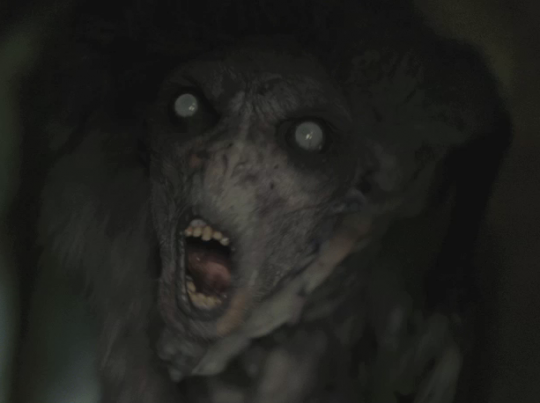
As a subcategory of the horror genre, the exorcism film does not have the best reputation. For every The Exorcist, there are a dozen Posessed’s and Beyond the Door’s. Yet, when done well, there is rarely something as profoundly [...]
It is difficult to know how to react when the credits roll after Drive. Applause for a tight and generally well crafted film? Disappointment, that the excitement and action has concluded? Or dance, commemorating the film’s fantastic soundtrack? One thing is certain: you’ll walk out with a feeling of contentment and satisfaction rarely awarded by film. Because if there is one thing that Drive is, it’s a good movie.
One of Drive’s greatest strengths is its commitment to a strong, straightforward plot. The Driver (Ryan Gosling, whose highly anticipated return to the silver screen has not failed to surpass expectations) is employed performing vehicle stunts for Hollywood while moonlighting as getaway wheels for petty criminals and a mechanic at a local garage. The apathetic balance of his life is thrown askew when he gets in over his head with an organized crime circuit.
Having set up this plot line, the film then leaves the plot to essentially solve itself. Instead of preoccupying itself with clever twists or richly layered dialogue, the film steps back to place it in context. Director Nicholas Winding Refn, who most recently directed the spare, stoic Viking drama Valhalla Rising, allows the Driver’s story to unfold upon the massive backdrop of Los Angeles. This is an alternate universe,existing in quiet dichotomy with the glittery world of Hollywood. The city Drive portrays is slick pavement, dim streetlights, and shadows. No one speaks because no one needs to. A cracked smile, a blink, that is the currency of communication.
Winding Refn uses Los Angeles as a character in itself. From scenes of sunshine and water in the polluted L.A. River to a tense scene where the Driver uses overpasses to hide from a police helicopter, the geography of Los Angeles is essential to the action and plot development. In particular, the lighting is used purposefully to evoke moods, surging warmth in scenes of romance, and cold whites and glaring reds with violence. The streets are brimming with the sleek forms of cars, and these cars are not the passive vehicles of action from standard film chases; instead they hold the same energy and character as a shuddering stallion. Frequently, the physical actions of the car mirror the Driver’s mood, stopping when he is surprised, accelerating with his rage.
Winding Refn has chosen two of the A-list’s most expressive faces for his main roles. Gosling has a magnificent control of his facial muscles, and while the Driver is largely stoic and reticent, his softened smiles communicate a shy hopefulness that dialogue might fail to deliver. Similarly, Carey Mulligan, though a stretch to believe as Irene, the wife of a petty criminal, has a seldom delivered smile that consumes her face. As the Driver cautiously grows close to Irene and her son, Benicio (Kaden Leos), all three exhibit alternately childlike behavior, exuding a sense of ignorance, and innocence, that makes their risk all the more acute when events take a brutal turn.
In at times comedic and villainous roles, Bernie (Albert Brooks) and Nino (Ron Perlman) are bursting with menace while still appearing natural, realistic.The violence in turn is very careful, with tasteful but explicit gore. As the film progresses and the Driver delves deeper into the treacherous waters of Bernie and Nino’s world, the tension gains momentum and accelerates to a fantastic and bloody climax.
But for all its simplicity, Drive is not one, long car chase. Underneath all of the blood, the gasoline, and the tire marks, there is an interesting view of Hollywood, and the effects of a world where the artificial lies in bed with the dangerously tangible. The Driver mainstreams as a stunt driver,performing car rollovers like circus tricks. We see the expenses put into the faux-violence, the faux-danger, but what of the cost? Drive shows us what happens when the artificial and the tangible bleed into each other, as the line between film and reality blurs. While the Driver may accomplish a safe rollover on screen, in real life, rollovers and fights and guns end in death. And the good guys don’t always walk away at the end.
This retrospective view of film continues to the last scene, with a Lynchian ending that leaves the viewer guessing, and more importantly, wanting more. One thing’s for sure, if the Driver wants to go for another, we call shotgun.
In the landscape of horror, rarely are the scenarios as probable as that presented in Steven Soderbergh’s Contagion. While the concept of a brute that wears human skin for clothes and sleeps with his chainsaw is terrifying, and the idea of fairy-like creepers living in the fireplace might make one’s hair stand on end, seldom does something settle in such a quiet cool as the very realistic concept of an epidemic that kills indiscriminately and pushes aside all feeble human defenses. This chilling message is what Contagion attempts to communicate, but unfortunately, the film’s message is not as infectious as its subject.
| Marion Cotillard takes a turn as an epidemiologist. |
One would assume that with an ensemble of such time-tested actors, the film’s emotional core would hold the strength. Instead, the actors struggle to pack sensation into largely stale dialogue. While Damon manages to force in some endearing earnestness as he protects his daughter, the other storylines are overshadowed by the vastness of the threat. As a result, many of the twists and jabs–in particular, Law’s cheeky narcissist–smack of phoniness, like a doctor attempting to make a joke while delivering a cancer diagnosis.
Perhaps this is because the antagonist of the film is so much more developed and fully realized than any of the characters. The opening of the film shows us the progress of Beth’s succumbing to the disease. Paltrow gives a disturbingly fantastic performance as she experiences brutal seizures at home, and the hospital. There is no question as to how deadly this threat is.
Still, the film does not go quite far enough. With a PG-13 rating, Contagion seems to have its hands tied. How can you make a film about widespread death, about the cultural response to this event, without the ability to show corpses in gory detail, to show the survivors in full violent and panicked reaction?
The result is a feeling of suspicion, like that felt while watching news coverage. Clearly, they aren’t showing us the full picture. There are bodies in the back room that we aren’t seeing, and there are children crying somewhere that we can’t hear.
The choice to release the film on the weekend of September 11th’s tenth anniversary is interesting, as it, surely deliberately, pairs the one-time horror of a devastating event that left so many innocents dead with the motiveless brutality of an epidemic. However, this comparison is most felt in the draw of the film; just as millions watched and rewatched video of the planes hitting the Twin Towers, the viewer watched the contagion’s spread not out of personal connection to those affected, but rather out of a recoiling horror and fascination.
Contagion’s great flaw, then, is that it attempts to combine two films into one. On the one hand, it is an exciting study of a potential scenario that has left the human race devastated, and could do so easily at any time. On the other hand, it is a treatment of the personal tolls–familial, professional, moral, economic–that such an event would take. Unfortunately, it does not successfully meld or juxtapose the two sides, resulting in a project that seems constantly uncomfortable with its current storyline.
The result? Walking out of the theater, viewers may not be filled with the intended cold fear, but they certainly aren’t touching the banister on their way out.
As sources of horror go, nothing is quite as profoundly terrifying as the concept of a plague. This is largely rooted in the knowledge that humanity has fallen prey to the devastation of a contagion, such as the Bubonic Plague that is estimated to have wiped out up to 60% of Europe’s population. Now, Steven Soderbergh’s Contagion adapts the horror of an indiscriminate scourge, touching on themes of vulnerability and exposure. No one is safe. With a cast that includes Kate Winslet, Matt Damon, Jude Law, Marion Cotillard, Gwyneht Paltrow, Laurence Fishburne, and Dmetri Martin (what?), this promises to be one hell of a ride to the Doctor’s office.
The fact that viewers are still so obsessed with fighting movies grates on me. If you want to convince me otherwise, you don’t have to explain to me about how it represents a primal state or has high stakes or speaks to something deep inside the human spirit. You just have to pluck that hard-headed brit from Inception and put him on a poster shirtless. Color me interested. Still, Warrior’s plot is less than colorful, actually described as an “underdog” story. Perhaps the fact that the film focuses Mixed Martial Arts, a fighting style that centers itself in meditation and body awareness, will give it another dimension. But I think the real core strength of this film will rest on the brawny shoulders of Tom Hardy and Joel Edgerton (remember him? From Kinky Boots?)
At first look, this film appears to be the buck-teethed lovechild of Boogie Nights and Happy Gilmore. If you think that parentage might put out something a little less than attractive, you’re right. But with parentage like this, Bucky is born to be...OK. While the trailer stinks of the “every good part of this movie is in the ads” conundrum, a look at the IMDB page lists character names like Miles Deep and Dick Shadow. If it supplies the right sly wit with its crude humor, it just might be worth $1 to rent it from Redbox in six months.
This film fest darling is coming to limited theaters this weekend, documenting the journey of a group of friends that enlist in the army in hopes of making money and earning their college tuition, only to discover the real horror of modern war in Afghanistan. With a trailer that combines a Garden State soundtrack melancholy with grainy images, this already feels like the kind of movie that’s mean to the viewer’s self confidence. A documentary to hurt, and remind. If its laurels say anything, this is worth a watch and a good think sesh.
Like Crazy
Out 10/28/2011
This trailer makes me want to cry. It makes everyone want to cry. Life is full of scraped knees, broken hearts, and missed opportunities. So what if it’s a cliche, it’s still true. Don’t deny it. Just cry.
Straw Dogs
Out 9/16/2011
Because just writing “Alexander Skarsgard” over and over again isn’t adequate commentary, I’ll note that this movie is a remake of an original that my boyfriend describes as too good of a movie to remake. This trailer’s got everything it needs to fill seats, with the menace of a film that’s not afraid to break unspoken rules and the casting to back that up. Alexander Skarsgard Alexander Skarsgard Alexander Skarsgard Alexander Skarsgard Alexander Skarsgard Alexander Skarsgard Alexander Skarsgard Alexander Skarsgard Alexander Skarsgard...
Contagion
Out 9/9/2011
Contagion has been billed as the ultimate horror movie for the modern world. You can be pretty sure you won’t get mauled by a Great White Shark or attacked by a Vampire that looks like Colin Farrel, but you can’t avoid touching things. Add to that the freaking incredible cast (thank you, Kate Winslet, for coming back), made possible by the fact that each actor had to spend only about 5 days on set, and you’ve got an A-lister germfest even worth forgiving some of the hokiest credits ever seen in a trailer.
Shark Night 3D
Out 9/2/2011
Sharks! In a lake! “This is insane! It’s a lake!”
‘Nuff said.
Atrocious
Technically out 8/17/2011, hopefully in theaters nearby soon!
Cue whining about how it’s just a remake of The Blair Witch Project. Atrocious is billed as “2011’s Answer to Paranormal Activity,” and it appears to have all the necessary traits and more. That means gritty, shaky handicam, haunted house evidence, and a few teasing shots of blood, blood, blood. There’s a reason they keep remaking The Blair Witch Project, it’s because it work...ed. And it will work again. Maybe this time. Maybe.
The Thing
Out 10/14/2011
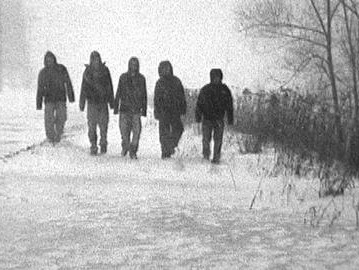
This snowy horror has all the trademarks of blockbuster horror that won’t quite deliver on its promise. Still, the icy isolation worked as a suspense technique in that one X-Files episodes, and I want to believe it will work again.
Guillermo del Toro has by now established himself as the master of the child horror-fantasy. His work–ranging from the brittle-cruel fairytale of Pan’s Labyrinth to the haunting ghost story behind The Devil's Backbone–is a ranging study of children’s unique potential to experience both horror and magic, enabled by an innate sense of wonder and lack of fear. Now, Don’t Be Afraid of the Dark adds another to his examination.
Don’t Be Afraid of the Dark may be billed as a remake, but it takes dozens of charming liberties from its 1973 original. Del Toro’s version follows Sally (Bailee Madison), a young girl sent to live with her estranged father, Alex (Guy Pearce) and his girlfriend, Kim (Katie Holmes). Alex and Kim are at work restoring the Blackwood Mansion, a towering structure of brick and dark wood trimmings.
Del Toro, who produced and co-wrote the film, arranges everything very carefully, so that the details of the house, the sounds, the lighting, all seem to drip with his influence. This movie possesses at times the haunting quietness of The Devil’s Backbone, at times the revolting horror of The Orphanage, and yet it is unlike any of its predecessors alone. Don’t Be Afraid of the Dark is marvelously polished, with hardly a misstep. Rarely does a filmmaker take an original and create a remake that is so clearly his own.
In part, this is due to his selection of fantastic and unconventional actors. Most notably, Madison is a twelve-year-old powerhouse. As Sally explores the house and, discovering its otherwordly inhabitants, tries to befriend them rather than escape, Madison is full of chastened curiosity and a struggle against emotion. The film aids her in that it does not try to make her cute, or give her charmingly childish things to say, or create jokes out of her youth. It instead leaves her alone to cry, to scream, to express her acute vulnerability.
![]() |
| Holmes returns to the screen as Kim |
However, the film really owes itself to del Toro’s formula. Aside from making a beautifully crafted film, he also defeats the most common downfall of the modern horror movie: the fact that the idiocy of the heroin is the driving force behind the plot, a trend that Neve Campbell’s Sideny Prescott describes as “some big-breasted girl who can't act who is always running up the stairs when she should be running out the front door.” By placing a child in this role, the film adjusts. There is plenty of the “Don’t go in there!” reaction, but the viewer forgives Sally for wandering into the basement, for looking under the bed. Rather than stupidity, we see that the film is driven by wonder, and it rings far truer than a heroine that manages to stumble and fall four times while being pursued, or one who never, ever remembers to pick up the gun.
But perhaps this wonder ought to be turned on del Toro, whose vision becomes more clear with each film he makes. As a group of films, Pan’s Labyrinth, The Orphanage, The Devil’s Backbone, and Don’t Be Afraid of the Dark form an inspiring and penetrating examination of the power of young imagination, and the danger of committing oneself too much to fantasy. Chiefly, what del Toro recognizes is the profundity of the darkness which exists in the human mind, and the ability of children to access this darkness without the fear that has been conditioned in adults.
While often marketed as horror films, they are in fact grisly fairy tales with the sort of unhappy endings that will creep on a viewer long after the lights come up. Don’t be surprised if you feel relieved when you walk out of the theater. Maybe everyone should be a little afraid of the dark.
The popularity of Vampires of late has given birth to dozens of creative and exciting reinventions of the original lore. The vampire is no longer the accented Dracula of legend; instead he or she is by turns a shimmering statue, a Viking, a distorted inhuman creature, and a child. Sometimes the vampire needs an invitation, sometimes it does not. Sometimes its death leaves it in dust, other times in bloody goop. The one thing that the vampire trend has not revisited in mass amounts is the landscape of campy, gory indulgence: the “Campire” flick. Now, Fright Night poses a remake intended to resurrect the “Campire” film, and instead puts the last nail in its coffin.
Fright Night follows Charley (Anton Yelchin), a newly-popular high school student living in a subdivision just outside of Las Vegas, whose life is turned upside down when a vampire named Jerry (Colin Farrel) moves in next door. Yelchin’s Charley is flanked with a limited cast of do-gooders: his single mother (Toni Collette), his girlfriend (Imogen Poots), and his one-time best friend (Christopher Mintz-Plasse, better known as McLovin of Superbad).
Where the 1985 film was a surprise hit and well received critically, still maintaining a 93% on Rotten Tomatoes, the 2011 remake doesn’t take advantage of the inherent camp of the genre to produce something enjoyable. The strength in the “Campire” genre, as with The Lost Boys, is the self-referential acknowledgement of the film’s location in the less than masterpiece. This gives the genre permission to take liberties with things that more discerning films avoid – cheesy one liners, excessive and fake gore, ridiculous turns of plot, and general tongue-in-cheek depravity.
Instead, Fright Night is strangely muted. Farrel, evidently trying to reinvent his image with character roles like the coke fiend boss he played in July’s Horrible Bosses, strains in the role of Jerry. The vampire, written to come off as smooth and somewhat absurd, instead appears vacant and peculiar. Farrel appears to think that he can communicate otherwordliness by refusing to focus his eyes at any moment, and so his pupils roam through every scene, like he is trying to read cue cards worn by moving camera men.
Farrel is not the only one visibly struggling with their role. The character of Charley isn’t a stretch for Yelchin, who has made his name playing earnest yet neurotic teens. However, his performance seems to be a battle against the material. Collette, whose comedic ability cannot be critiqued, also fails to land any of her jokes. Their interaction feels stilted, unnatural, and all of the emotional cues fall flat.
With the exception of David Tennant, who plays a phony performing illusionist in a delightful role that involves makeup, leather pants, and fake facial hair, all of the actors fall prey to the script’s inadequacy. Even Mintz-Plasse, whose role seems deliberately reminiscent of the much-loved McLovin, doesn’t manage to bring life to his character’s allotment of tired jokes.
One would assume that a Campire script penned by Buffy alum Marti Noxon would be on the mark at every turn, but instead, Noxon appears to have lost her touch. Where there are some instances of Buffy wit hovering around, for the most part the script is uninspired and lacks the creative drive to power the story toward any meaningful or interesting conclusion.
In addition to this sense of creative apathy, the 3D effects are both unnecessary and poorly executed. For the most part, the 3D is utilized only to make counters look more prominent, or enhance the effect of explosions. Granted, this complaint is levelled against many of the new 3D releases; however, Fright Night stands out due to its clear low quality. In any of the scenes involving night time or shadows, the resolution is blurry and appears hazy, with no definition. There are times that faces areall but unrecognizable, and action is unclear due to the murky effects.
Fright Night is not the first to fail in a remake, but it is the first with sucha noticeable metaphor for the danger in reviving the dead. In the end, the film communicates an effective message: some things are better left alone. Let sleeping vampires lie.
The age of the misfit comedy has officially begun. A visit to the theater shows the most promising trailers to lie in the hands of Freaks and Geeks royalty, writers of razor sharp wit, and producers hailing from beloved titles like Superbad. Now, in a landscape of hilarious “offbeat” comedies, 30 Minutes or Less hardly skips a beat.
30 Minutes follows Nick (Jesse Eisenberg), an everyman-boy who spends his time delivering pizzas and crushing on the sister (Dilshad Vadsaria) of his best friend, Chet (Aziz Asnari). Starting out with all the hallmarks of a buddy comedy, from badly coordinated fighting to hurling profanity-laden insults at each other, the film pulls a 180 when two amateur criminals, Dwayne (Danny McBride) and Travis (Nick Swardson) strap a bomb onto Nick’s chest and instruct him to rob a bank in the next 10 hours.
Jesse Eisenberg, selected previously in director Ruben Fleischer’s Zombieland, is a careful and deliberate choice. Eisenberg, who received an Oscar nod for his role in The Social Network, is at home as the narcissistic and wryly witty Nick. 30 Minutes gives him the opportunity to exercise his asshole muscles more extensively than his role in Zombieland, and the effect is simultaneously funny and endearing. Eisenberg has a unique talent for switching from the self absorbed cruelty of the standard young man to a cautious vulnerability that is so authentic, it is impossible to not be taken in by his characters.
At opposite, Aziz Asnari gets most of the film’s funny, portraying his character with a theatricality that, while at times breaking the fourth wall with the feeling of a stand-up routine, is also the greatest comedic strength of the film. In comparison, Eisenberg at times fails to carry his end, and their banter sometimes leans too heavily on Asnari’s comedic strength. However, even with a bit of overacting from Asnari, the jokes are predominantly successful and the witty and fast-paced script picks up any necessary slack.
The film’s villains are worth noting as well for their more low-brow style of humor. As two rednecks, McBride and Swardson are in their element. In comparison to Nick and Chet, the two criminals’ interaction seems a bit slow and lacking in the cracking wit; however, the juxtaposition of the laughs creates a well-rounded film with jokes for fans of all comedy types. Fleischer has showed himself to be very skilled at making humorous films that not only lampoon a genre (such as the Zombie flick, or now, the heist movie), but also use the tools of that genre to construct a surprisingly effective film in its own right. 30 Minutes functions perfectly as another offbeat bromance with bite, but it is also simply a good movie about robbing a bank–something that cannot be said about many films.
And that is what 30 Minutes is. Some bank robbers just have more fun.
Subscribe to:
Posts (Atom)